Showing posts with label motherhood. Show all posts

Tuesday, July 10, 2018

The Purposeful Woman


I am so excited to introduce you all to this month's Purposeful Woman. Krysten is an amazing woman who balances a full-time career, a personal consulting business, as well as a family. She tells the powerful story of how she and her husband struggled with the heartbreak of infertility, and how she used her personal business as a way to rise above. Today, she is raising awareness to the harmful ingredients we use in our everyday products, and what we can do to better ourselves and our health by switching to safer products. She is a woman who lifts up others and encourages all women to follow their dreams.
Krysten and Aaron have been married for seven years, and together, with a home on the lake in central Minnesota, they are raising their two beautiful daughters: Addison (almost 4), and Emilia (7 months). Krysten, who earned her undergrad from the University of Minnesota, Duluth in psychology, and a masters in Counseling Psychology from St. Cloud State University, works for the College of Saint Benedict in student accessibility services. She provides students with disabilities additional academic and housing support. In addition to this career, she also balances a consulting business with the Beautycounter, a B-Corp, whose mission is to raise awareness of harmful ingredients in personal care products, provide safer solutions, and push for more protective health laws in the personal care industry.
Years ago, I followed Krysten's food blog, which she had built during her stint as a stay-at-home mom after the birth of Addie. She had the best recipes and made even me, a kitchen-inept woman, feel I could pull off some culinary masterpieces. Sadly, it's not possible to balance everything and she has since let that venture go. "It was a lot of work! Maybe some day I'll bring it back." That would be amazing. 

How does Krysten describe herself in three words? Driven. Straight-forward. Honest. "Doesn't seem to make me seem well-rounded; it should be something like... mom." But in a world of Minnesota-nice, "I always like to know where I stand. People can always know where they stand with me."

Krysten's born-and-bred Minnesota girl shines through when she describes her favorite things as her family, "being on the water", and a "nice cocktail." She sipped away on one of those while we had this interview. With the lake in the distance. My Minnesota heart yearned to be physically with her. Some of her other favorites? "I'm going to sound like a giant hick right now, but I love country music. I am a country girl." Specifically, 90s country. "I also listen to a lot of kid-bop. Which sometimes I just listen to because it's, literally, all the hits. It's so funny how they change the lyrics, just a little bit, so that you're like... pumping that water," she says with a laugh. All moms out there will know exactly what she means. Her favorite book is Girl, Wash Your Face, by Rachel Hollis. "Every word of that book I'm like, yes! yes! yes! It's just so darn good!" 
Krysten had no hesitation when asked about her favorite food. "Tortellini Straw and Hay from Ciatti's." (Which, sadly, is now closed.) "I would eat it like it was my job. And I have tried over and over again to perfect that recipe and I just can't do it." Ironically, it was this very recipe from her blog that I served to all on my bunco ladies for dinner one night, years ago.

"What is your first thought in the morning?" 
"How many times can I hit snooze? Do I have to wash my hair?" Insert fingers into the hair for a wash check. "Then I start going through what needs to happen in the morning. Calculate."
Parenting is tough, and Krysten knows just as well as any mom out there. So, Krysten, "what would you describe as your parenting motto?" 
"We're the boss. What we say goes. I think we're pretty strict. And then I heard this thing a while ago about how the way you talk to your kids becomes their inner-voice. So I try to watch what I say. I want to boost [Addie's] confidence."

Marriage. Krysten and her husband Aaron have been married for seven years. Although they knew each other in high school, it wasn't until they were in college that they began dating. "He asked me to come with him to a party and it was Olympics themed, so he was dressed like a figure skater. Tight pants, buttoned shirt, shaved chest. And I was like, yes!" Krysten describes sitting on their beach together after the kids go to bed as one of her favorite things to do with Aaron. 
"How do you prioritize your marriage?" 
"Well, I think it's the little things. Texts. Just checking in with the other person to see how they are. And also giving each other space for ourselves. It's a balance." The one word she uses to describe their marriage? "Team."

"How do you prioritize your health?"
"I try! It's something I need to be better at. For a while, I did get motivated to do something about it but then my milk supply tanked. And so I stopped. Reluctantly. I had to feed my baby. I mean, I try to eat well and walk, but I do need to do more."
"What makes you feel beautiful?"
"Happiness." Which is pretty much a perfect response from her because Krysten is a beautiful woman whose beauty is only magnified by her generosity, kindness, and happiness. She absolutely oozes happiness.
"What is the one thing you would improve about yourself?"
"I would be more patient. Both with others and myself."
"What do you do to treat yourself?"
"A bath. A good bath. The View. I watch it every night when Aaron is putting Addie to bed. I started watching it when Addie was a baby and I still watch it every day. I feel like those women are my friends. And I love Meghan McCain. She doesn't care what anybody thinks!"
One of the people who inspire Krysten the most is her mom. "That might be cheesy." But as women, aren't we trying to lift each other up, raise our daughters to be incredible women? I'd say it's a true testament to her mom when she says that she inspires here. "She worked full-time as a professional, and has always encouraged [my brother and I] to chase our dreams and work hard. Oh, and to have fun along the way. To truly enjoy the little moments."

"What is one of your biggest dreams? Don't be shy!"
"Only one?" she said with a laugh. "I want to be managing director for my company, I'd love to have a coffee shop, and a resort. On the lake. There are no good coffee shops around here. It's time. It's needed. And I want some good coffee!"
"How do you manage the voice of doubt when it comes to those dreams?"
"Minus parenting, I don't usually have those thoughts. With parenting, I'm like, I don't know what to do. But in business, I don't usually have those thoughts. It's a matter of how am I going to do this. And with parenting, I do a lot of research. I'm a big researcher and try to figure out milestones and how to approach things. I'm just a figure-outer and have kind of squashed 'I can't do this.' I'm like, okay, I've got to figure out how to do this."

About four years ago, when Krysten was still blogging, a friend started posting on Facebook about a company called Beautycounter, and it piqued Krysten's curiosity. "I am a product junkie!" And when the opportunity came, they collaborated on the blog and Krysten was able to try her first Beautycounter product. "I fell in love with the cleansing balm. I told Aaron, I don't want to do the consulting, but this is the discount and I want to buy a bunch of cleansing balm. Run the math! But then, after a few days, I thought, 'I can do this'. At the time, I was a stay-at-home mom, and Addie wasn't napping and honestly, I was just miserable as a stay-at-home mom. That makes me feel like a bad mom, but it just wasn't for me. I needed more interaction, and more goals." 

What is Beautycounter? It's a direct retail company that advocates for safer products for everyone, Beautycounter or not. There are over 1,400 ingredients that have been banned in personal care products in the EU, but in the USA, there are 30. There has been no legislation passed in the USA to regulate personal care products since 1938. Beautycounter is unique in that they have the Never List, which contains over 1,500 ingredients that they have banned from their products. They lobby for better legislation for the regulation of all personal care products. Currently, Beautycounter offers safer options for skin-care and anti-aging regimens, cosmetics, as well as body products, including a line for babies and children. "It's for the whole family."
Beautycounter team advocating for stricter regulation.

"After I decided I was going to do the consulting, I decided that I should probably look into the safer products aspect, as it seemed a big deal for the company. I started looking at the products I was using with Addie and I was like, holy crap! I thought I was doing right by what I was putting on her. But I so wasn't. And I was shocked." Krysten then went to the other women in her life: her mom, who was a nurse practitioner, and her friends, who were also moms like her, and no one was aware of any of it. "I felt like I needed to start telling people! And that's how my business started to grow." While learning about the harmful ingredients that prevail in so many products we use everyday, Krysten learned some shocking information when she took a deeper look into the products she was using. "I found there were so many that could be causing hormone disruption, and reproductive harm, among other things." Before Addie, Krysten and her husband suffered major, and repeated heartbreak with the loss of five pregnancies, "that I know of.". After extensive testing, their diagnosis was bleak. It was unexplained infertility. "It's almost better to have an actual diagnosis so we could have figured out what to do with that." The realization of the potential harm the products they used were causing "just lit this fire inside me. We suffered heartbreak so many times, and I decided, that, as a mom, I have to share this with as many people as I can." Krysten made the switch to safer products with everything in her house, from personal care, to detergents, to cleaning products. "I started hitting it hard. And then, in between Addie and Emmie, we had zero miscarriages." Krysten has no absolute proof that there is a link between her fertility and the products she is using, but it's also an idea that's hard to dismiss outright. 

Krysten's long-term goals for her role in the company are to achieve managing director, which is the highest position in the company, and to continue to grow and expand her team. "The more voices we have to share this mission, the more people we will have that will be educated." 

"One of the biggest loves and challenges I face is seeing so much potential in others to share Beautycounter!  I absolutely love seeing others take the reins of their own business. This is also the tough part, as I see so much potential in others and know that with a little grit, patience, and persistence, a consultant could take this business wherever their heart desires... and not seeing him or her go after that potential is hard!"

"If you could choose only one item from your product line, what would it be?" "Oh boy. I'm going to cheat on the cleansing balm and say the overnight resurfacing peel. Because [it] is magical!

Thursday, June 21, 2018

To be a Mother is to be a Warrior

*Disclaimer: this may be my longest post to-date... but it was a story I had to tell, at least for myself.

When we hear the word warrior, what do we think of? What comes to mind when I hear this word is the archetype: a man, decorated with heavy armor, and perhaps a sword or battle ax. It's possible that I've scene The Chronicles of Narnia too much. 

Merriam Webster's definition of a warrior is: a person engaged or experienced in warfare; broadly: a person engaged in some struggle or conflict

Google's definition of a warrior is: (especially in older times) a brave or experienced solider or fighter

Being a warrior isn't just an external roll, it's something that can be very internal. A person doesn't have to physically be a fighter to still be a fighter. In fact, I would imagine that we have more internal fights than we ever do physical ones. Unless you're a boxer or UFC fighter, maybe.

Traditionally speaking, a man is a warrior. But, let us not overlook the fights that women take on throughout their lives, and the lives of their children. We are warriors, too. Mothers are warriors.

Psalms 127:4 says, like arrows in the hands of a warrior are sons born in one's youth.

If our children are the arrows, who is the bow? Mothers.

Lisa Bevere profoundly says, "Women intimately partner with God as they bear and raise children. [Our children] are our seeds and His heritage and reward. They are the ones we launch into the future. They live far beyond us with eyes that see up close what we see only far off in the distance. Their ears will hear out loud things that were only sounded as a whisper in our lifetimes. They are to be carefully aimed and propelled, for they will not easily miss their marks. We are promised that, by raising them in the way they should go, they will be more inclined to hit the target of their destiny in God when they are grown."

Necessary battles await everyone, but who fights for our children before they can defend themselves?  "[Children] alone hold fast and carry into the future what we have already won on their behalf." Like arrows are launched ahead, "our children are sent into the future we may never see."

What are the biggest fights we've had to fight for our children? When, as mothers, have we taken up our warrior personas? As mothers we must lead by example... carefully aim those arrows. Our children will take up as warriors based on what kind of warrior we were for them.

When our children are young, we fight for them. We advocate for them. We are pillars of stone for them. This is what makes us a warrior.

My son is Dyslexic, and getting him the help he needs, that is specific to his learning profile, has been one of the biggest, most exhaustive battles I have ever fought. It has gone on for years. He is nine now and just finished 3rd grade. And it wasn't until half way through this year that we finally were successful with one battle. But the war rages on. And I will continue to be the warrior he needs until the day comes when he can carry the sword and wear the armor I have built for him. 

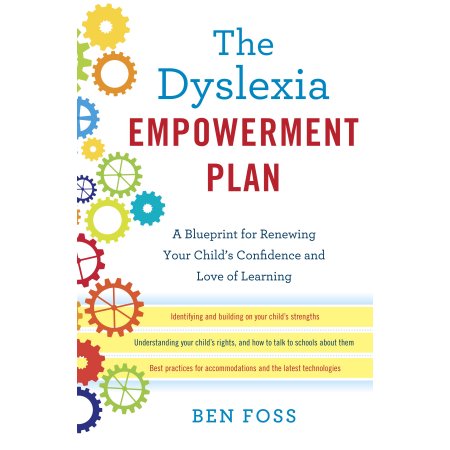
Ben Foss JD/MBA, author of The Dyslexia Empowerment Plan tells us to tell our story. It helps break down barriers of ignorance and uncertainty. So here is our story. 

The first flag that was ever raised suggesting letters and words didn't come easily to Co was six years ago. I remember having a conversation with his preschool teacher because I was concerned that he just wasn't learning them well. She assured me that he had plenty of time to continue learning his letters. She also told me that boys tend to learn the components of reading slower than girls of the same age. She told me the best way I could help him was to keep him reading. I walked away from that conversation and said, "Okay." I felt better. 

Then his second year of preschool came and at parents' day there were kids, both girls and boys who were reading passages. Now, I know these kids worked on those passages, but my son still didn't know half of the alphabet. I kind of sunk in my chair. That was my second flag.

In kindergarten he made improvement, and I thought to myself, "Oh good... he's starting to catch on." But by then end of the year, when I got his DIBELS score, I was disheartened. Little did I know we would go down so much more than that. So we rolled with it. When I asked his English teacher about it she told me not to worry. He just needed to read more. So that's what we did. We read a freaking lot.

When he was starting first grade I was preemptive and met with his English teacher (he also studies Chinese), and gave her a heads up. She said she would assess him first and then we would have a better idea of what was going on. So I waited... and waited... and didn't hear anything. Then we sat down with his teacher during conferences, and she showed us his score. Definitely below the grade level benchmark, but not something to be "alarmed about." Those were her words. By the end of 1st grade, with his reading scores dropping and dropping, the school's reading coach was brought in. She told us to have him read more. Again. I was mad. I was sick of hearing that. Like his struggle was somehow because we were failing him at home by not having him read enough. But we read...for 20 minutes EVERY night. Plus he was spending at least an hour on homework for a first grader. Was there really MORE to do?! 

Shortly before the end of the school year, the district sponsored an event at a local library that was for parents of struggling readers. So I signed up and went. I got a spot right up front, excited to take notes. I seriously thought I was going to go into that event and learn a few things and take those things home and Abracadbra, everything would be great. It was during this event that I first heard the word Dyslexia. Okay, not technically the first time, I was familiar with the word. But it was the first time this word was ever used in connection with my son. I thought to myself, "there is no way." But he met all the criteria. When the speaker, who's son is also Dyslexic, told us about their journey, how her son learned, the mistakes he made, how he struggled, I began to cry. Right up in front. When I walked out of there that night, I felt heartbroken. I didn't have any answers to take home. If anything, I only had more questions. 

We managed to finish off first grade. That summer Co participated in a 4 week reading program. They did all sorts of reading games and passages on a computer that was specific to them based on their lexical scores. Every day when I picked him up he was always happy and said he had fun. So... maybe this was going to be our turning point.
At the beginning of second grade I also tried to be preemptive, and addressed Co's reading difficulties with his teacher. She was very receptive to the situation and said she would assess him to get a better idea of where he was and then she would start working individually with him. She followed up with me via email after the first DIBELS test (those dang DIBELS, again), and had put together a plan to help him one-on-one outside of the classroom as well as putting him with a small group. Okay... there is a plan. That's good... right? During our first conferences his teacher kindly slid a business card across the table toward me. It was for a center for academics. "They might be able to help," she suggested, "but it won't be free." I looked into it... won't be free... won't be cheap! But surely that didn't matter if it meant he was getting the help he needed. 

He was assessed and the woman that runs the center was very straight-forward with me when she told me how far behind he was. Then, she told me, with a disclaimer that she is not a clinical psychologist and could, therefore, make no diagnosis, but that Co was bullet point for Dyslexia. There it was again... that word... the D word. It scared me a little. I knew very little about it, and come to find out that what I did think I knew about it was actually all wrong. It was time to start asking the hard questions. But looking back, I don't think I was ready for the hard answers at that time.

I prayed. I did a lot of praying. Then I went to the school. Surely they would help me. Oh boy was I naive and ignorant. I authorized an evaluation, to this day I don't even know what it was. Which sounds terrible on my part. But I have the consent form as well as their proposed action and the name of the assessment is on none of it. The school assessed him. How? I really don't know. But I got a letter: Notice of Refusal of Proposed Action. My heart fell. The letter even had statements in it that said: "needing strategic support and intervention in reading, but not intensive support." The school's solution was to have his teacher do more individualized work with him in the classroom. That sounds great and all, but how is a teacher supposed to hone in on my son while also teaching 25 other kids all in the span of half a school day because the other half is spent in their dual language? His teacher looked as frustrated as I was. So I asked the school... if I suspect Dyslexia, where would I go? They told me to go to his pediatrician because it was a disability. The pediatrician referred me to the school because this was an academic issue. WTH?! I prayed harder and harder but I was beginning to think that God and I were speaking a different language. Why would He allow us to hit all these barriers? All I wanted was help with reading for a seven year old.

This is the moment I realized I was going to have to suit up for battle. Mom walked out the door, and in came a warrior. 

I began my personal education program, all self-taught on Dyslexia, what it was, how it worked, and where to get help. I found a psychologist in downtown SLC and called for an intake and when I finally was able to speak with someone about the doctor I wanted to see, I was told that they wouldn't be able to get my son in for about three months. I started to cry. Trust me, warriors still cry. They put me on the cancellation list and then I had to sit and wait. Ironically, I was in my counseling appointment when I took this call so my therapist was extremely helpful in those moments that followed that call. Later that evening, I got a call. I actually had considered not answering it because I didn't know the caller. But I did. It was the doctor, herself, calling me. I was flabbergasted. Not only was it way after-hours, but we weren't even actual patients at this point. And she was calling me anyway to give me some advice! Co would need testing. It was about $150 an hour and he would test for about eight or nine hours. Then there would be the interp for another $150 an hour for about 12-18 hours of interp. And... 0% would be covered by insurance (gasp!). BUT, legally, the school had to do the same testing if I requested it in writing. The doctor told me I could then schedule with her and she would review the test results. She was going to have her assistant call me in the morning and make sure to squeeze me in. Was this really happening? Why was she calling me? Doctors never call, even when it's their actual patients! Maybe God and I were on the same page.

 I followed her instructions to a T and went to the school's administration, officially requesting testing for sped. They weren't super friendly about it but cooperated anyway. The admin we worked with put a document in front of us. And it was full of legal and academic jargon that I had no idea how to process. So we went down the list and she gave us an "overview" of each line in "laymen's terms"... so I accepted or declined testing based on her recommendations of what Co needed. It took almost the full 45 school days for them to get started, but it started nonetheless. And I was called in for a meeting. Tim came with me, and there was a whole team for the school. It was a little intimidating. They gave me another document refusing sped. I was devastated. How could they look at one document and think my son was performing in a 'normal' range yet on his DIBELS he was almost 40% BELOW the benchmark. And on his schoolwork he was getting 2,3,4 points on tests with 30 questions. 2/30... how does that fall in the 'normal' range? I was devastated. I was mad! Honestly, I started to lose hope. I tried hanging onto Hebrews 11:1 Now faith is confidence in what we hope for and assurance about what we do not see. But my faith bottomed-out. 

I took the results to the other psychologist in SLC and she looked at the exact same data the school did- it was their results- and the doctor found alarming red flags throughout all of it. Then she asked me about why certain things were missing. What did she mean? I wrote an actual letter to the school requesting exactly what the doctor had told me to. I pulled out the letter (I actually kept a binder where I had everything organized by grade level for him from: tests to work samples to follow up emails to progress reports to rejection letters), and I pulled out the form where I accepted/declined parts of the test. Remember, I did that based on the school's recommendations. Yeah... turns out I declined testing on some of the things that would have mattered most. They basically just gave him an IQ test, of which he actually scored above average on. Now I was pissed. The kicker... he was not eligible to be tested on any of it for 365 days. I wondered, and still do today, why they wanted to test his IQ when he should have been tested in reading and writing? Did they think because his scores were low that he was stupid and that was why they tested the IQ and not the reading? The problem for Co came with decoding and phonemic awareness, as well as letter recognition. He was anything but stupid. He loves art and music and has a strong aptitude for math and science.

I was discouraged, mad, emotional,defeated, frustrated, emotional some more. I would sit in his room at night after he'd fallen asleep and I would run my fingers through his hair and sob while I silently prayed to God to get him the help he needed. I would kiss his forehead and tell him, mostly to reaffirm to myself, that I. Was. Going. To. Get. Him. Help. We read every night (every year people told me that was what was going to make all the difference), he went to a literacy center twice a week, he had special group reading/instruction, he had one-on-one reading/instruction time... but come the end of the year, the DIBELS came back. He'd tanked it once again. I hate the DIBELS. I even took them to the woman who ran the literacy center that he went to. She told me that I had to find a way to get over the DIBELS. The point of that test was to test for speed and accuracy. His accuracy was never too far below benchmark, it was his speed that was killing him. It was taking him too long to decode and process what he was looking at. But why, why did he have to read fast? Isn't the tortoise the one who wins the race? Not because he is fast but because he constant. That made sense to me. Nowhere in life has it mattered on any scale how fast or slow I could read. The point was that he was able to read. Who cares if it was slow? I was actually encouraged to opt him out of the DIBELS moving forward. Which he will take three times a year until 7th grade. But I decided against that. Not because I liked stressing out every time those numbers came back terribly low and in bright, blazing red that meant he was in the high risk/intervention category, but because they were hard evidence of his low proficiency. We managed to survive second grade.

Welcome 3rd grade. This would be a pivotal year for reading. According to the American Educational Research Association, a student who was unable to read at grade level by the conclusion of 3rd grade was actually 4x more likely not to graduate and almost 70% chance of never catching up to his peers. Until this point, students are learning to read. After this point, students are reading to learn. Remediation becomes much more difficult. A below average reader in first grade is only 13% likely to be on reading level by the end of third grade, according to a research study. Co's beginning of year DIBELS for third grade was:

Words Correct: 34... the benchmark is 70
Accuracy: 85%... benchmark is 95%

Fortunately, his third grade teacher was amazing. They were all good and helpful up until this point, but this teacher went out of her way to accommodate Co in ways no one had before. And she became my biggest ally. She went to the administration requesting further testing for Co. They denied her. It wasn't past the 365 day window. Technically the school could choose to test before that, but I had no say in the decision, it was completely up to the school. But this didn't stop his teacher from accommodating him though. She did things like: not making him read aloud in front of the class for something he hadn't prepared in advance for, she read test questions to him, and gave him the option of a re-test (with another reader for support) for things he failed. The point was to test him to see if he knew the material. Not to see if he could read the questions about the material he was being tested on. She even accepted audio books he had read through the year because they were still books. In a culture with so much emphasis on eye reading, I was amazed at how open-minded she was. 

I went back to the drawing board. I met with the psychologist in SLC again and she helped me more and more. It was clear to me I was going to get no outside help. I'd felt abandoned by even God. I was on advocacy websites, I combed through the district's safeguards and procedures handbook: highlighting and underlining legal jargon that I turned to Google with to understand it all. I learned our state and federal rights based on legislation. I became very vocal and attracted help from other teachers in other states, a vice principal in Texas who was on her school's IEP team, a resource teacher for our district who taught at the high school level. Now I was beginning to understand Co's rights. And then I found GORT. Gray Oral Reading Test. And I confirmed that that was a test I never legally opted out of. So, I composed an email and sent it to the whole admin team at the school and requested this test. Then I spewed out some legal words and laws that were in place and I even quoted passages from their own safeguards and procedures manual... I totally made it look like I knew EVERYTHING. Proverbs 18:21 tells us that our tongues have the power of life and death. At that point, it felt like I was actually fighting to the death. The admin actually asked me where I learned about the GORT. I just simply told them that I'd done my homework. So, I signed the document requiring the school to test him. About 3 weeks later I got an email- Co was approved for an IEP. Finally, a freaking legal document that required help and intervention for him. I cried in relief so hard when I got that email. And I re-read it about 50 times to make sure I saw what I saw. I was exhausted. I had been fighting for this since school began for him. And I swear if one more person ever tells me that my son simply needs to read more, I will chuck my shoe at them. 
When I got the proposed IEP document, I looked over every word. I googled suggestions of things to have in it. And when my husband and I went to our first IEP meeting, I pulled out my copy of the document which was all loaded up with changes I wanted to make... they were not pleased, but agreed to most of what I proposed. 

So the battle was won. Unfortunately the war still rages on. And it will, at least until Cohen gets through school. I just have to be on top of his IEP and his academic performance so that I can advocate when and what changes will need to be made along the way. The IEP is a living, breathing thing that will need to change and mature as he does over the next several years. But like I said, this battle has been won. 

This fight has taught me so much. I have learned so much about myself. 1) Even after a million tears have been shed, I am not a quitter. 2) I would move mountains for my children. 3) I didn't realize the true capacity of my strength until being strong was my only option. 4) I am a warrior.

I am often applauded for my fight and subsequent success. And I've had other people come to me for support and information, and I am more than happy to share what I have learned. But I don't think I did anything special - nothing that should ever be outside the norm of the lengths a mother would go to for their child. I want to give my kids the world, and teach them to believe they can be anything they want. I want to raise children who make an impact, who make a difference. I'm just hoping I can be a good teacher, that I can take a proper aim so that when I send arrows off to the future they will hit their marks, that they will be equipped with the ability to not only be warriors for themselves, but for others as well. 

Wonder what reading is like for Cohen? You can play a little game where you are timed to see if you can decode a sentence the way a Dyslexic person would see it. Click the link to Understood, scroll down to "Simulations" and select "Reading Issues". You can skip the short video clip before you begin the game. Give it a try. Dyslexia isn't just about reading things backwards. It is a distinct physiological characteristic relating to brain function. Dyslexia is a part of 1 in 10 people in America. Unfortunately remediation will only take Cohen so far. At a point, he will not be able to go any higher. Which is where technology comes into play. Fortunately we live in an age where we have all the technical advances that we do. Dyslexia is a physiological characteristic, it is not a disease and does not have a cure.

To truly chase our dreams, we need to be strong and steadfast. Our bravery helps us rise and fight back against our fears.